

Every coffee machine, whether it’s a filter machine, an espresso machine, a bean-to-cup automatic or a pod machine, follows the same broad order: grounds or a pod, then water, then brew, then serve. The exact button sequence differs by machine and model, so rinse it through with plain water before your first real coffee and keep the manual handy for anything specific to yours.
Learning how to use a coffee machine for the first time is less about barista skills and more about getting the basic order right. Grounds or a pod go in, water goes into the reservoir, you pick a brew, and the machine does the rest. Where people trip up is assuming every machine works the same way. A filter machine, an espresso machine, a bean-to-cup automatic and a pod machine handle that order differently, which is exactly what this guide walks through.
Start With the Manual That Came With Your Machine
It’s tempting to skip past the manual and start pressing buttons, but coffee machines vary more between brands, and even between models from the same brand, than almost any other kitchen appliance. One machine primes itself on power-up. Another needs a blank cycle run by hand. A third won’t brew until you’ve set the clock. None of that is obvious just by looking at it, and guessing wastes both time and coffee. Keep the manual somewhere you’ll actually find again, since you’ll want it the first time something doesn’t behave the way you expect.
What You’ll Need Before Your First Cup
The list is short, but each item matters more than it looks:
- Coffee, ground to suit your machine: pre-ground for a filter machine or most pod machines, whole beans if yours grinds its own
- A pod or capsule, if that’s your type, matched to that specific machine’s system
- Fresh, cold water for the reservoir, filtered if you have it
- A cup that actually fits under the spout, which sounds obvious until you’re holding a tall mug under a short spout
Which Type of Coffee Machine Do You Have?
Before anything else, work out which broad category your machine falls into. It changes almost everything about how you’ll use it day to day.
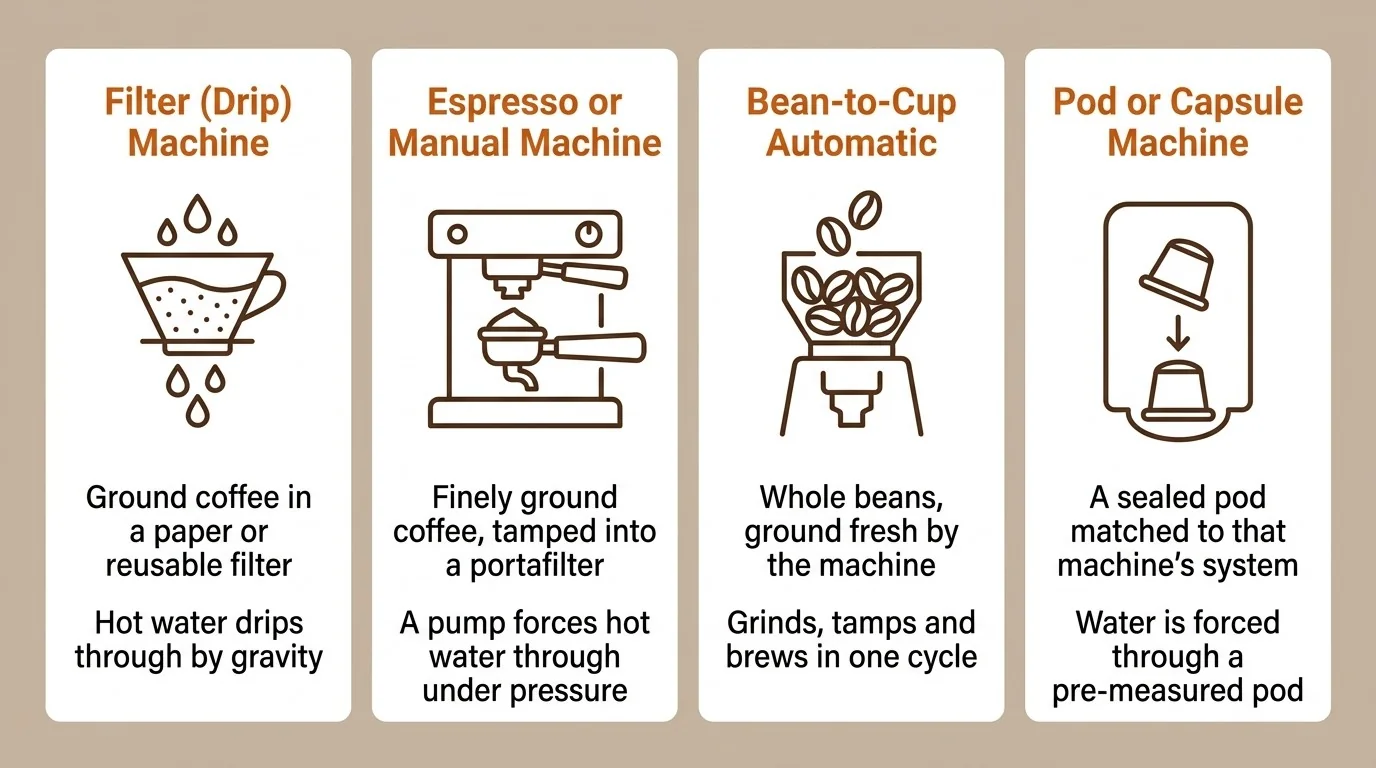
| Type | What Goes In | How It Brews |
|---|---|---|
| Filter (drip) machine | Ground coffee in a paper or reusable filter | Hot water drips through the grounds by gravity |
| Espresso or manual machine | Finely ground coffee, tamped into a portafilter | A pump forces hot water through under pressure |
| Bean-to-cup automatic | Whole beans, ground fresh by the machine itself | Grinds, tamps and brews in one automatic cycle |
| Pod or capsule machine | A sealed pod matched to that machine’s system | Water is forced through a pre-measured, pre-ground pod |
None of these is more correct than another. What matters is using yours the way it’s actually built to work, not the way a different machine you’ve owned before worked.
Rinse and Prime Before You Use It the First Time
Every coffee machine sits in a box for weeks or months before it reaches your bench, which means dust, packaging residue and stagnant water sitting in lines that haven’t run yet. Run at least one full cycle of plain water through it, with no coffee or pod in place, before your first real drink. Espresso machines and bean-to-cup automatics often need this step to prime the pump too, which is what gets water moving through the internal lines. Skip it, and your first coffee can taste faintly plastic or metallic, or the machine can struggle to build pressure at all.
That first rinse is a one-off, but the machine will need ongoing care from here. Mineral scale builds up in every machine type over time, so it’s worth reading up on how often you’ll need to descale a coffee machine before the flow slows down or a warning light comes on.
The General Workflow: Grounds or Pod, Water, Brew, Serve
Once the first rinse is done, the day-to-day routine is genuinely similar across every machine type, even if the buttons look different:
- Fill the reservoir with fresh, cold water up to the marked fill line, not guessed by eye.
- Load your coffee: ground coffee into a filter basket or portafilter, or a pod into its designated slot, following whatever dose your manual specifies.
- Select your brew, whether that’s pressing a single button on a filter machine, choosing a size on a pod machine, or picking a drink type on a bean-to-cup touchscreen.
- Position your cup under the spout before you start, not after you notice coffee running everywhere.
- Let the cycle run through fully. Interrupting it partway rarely improves the result and can confuse the next cycle.
- Turn the machine off, or let it enter standby, once you’re done, and empty the drip tray if it’s starting to fill.
Why the Exact Steps Differ by Machine Type
The four types above aren’t just cosmetic differences. A filter machine relies on gravity: hot water drips through grounds sitting in a basket, which is why the grind is coarser and the result is gentler. An espresso or manual machine forces water through tightly packed, finely ground coffee under real pressure, which is why grind size and tamping technique actually matter. A bean-to-cup automatic does the grinding and tamping for you inside a sealed unit, trading some control for convenience. A pod machine skips grinding and dosing altogether: the capsule already holds a fixed, pre-ground amount, so the machine’s only job is to pierce it and push water through.
If your setup grinds its own beans, whether that’s a built-in hopper on a bean-to-cup unit or a separate grinder beside an espresso machine, it needs its own upkeep too. Ground coffee leaves an oily residue a quick wipe won’t shift, so it’s worth learning how to keep a coffee grinder clean alongside your machine’s own routine.
Common Mistakes First-Time Owners Make
- Using the wrong grind: too fine in a filter machine chokes the flow, too coarse in an espresso machine gives a weak, watery shot
- Overfilling or underfilling the portafilter or pod slot instead of following the marked dose
- Ignoring the reservoir’s fill line and just eyeballing it
- Assuming a “self-cleaning” cycle replaces an actual descale. It doesn’t
- Forcing a pod into a machine it wasn’t designed for because it looked like it might fit
When It’s the Steps, and When It’s the Machine
Most early problems come down to a missed step rather than a faulty unit: wrong grind, wrong dose, a reservoir that wasn’t actually full, or a cycle that got interrupted. Check the manual first, since a lot of “broken” machines are just being used slightly wrong. If you’ve matched the manual exactly and you’re still getting weak, inconsistent or leaking results, that’s when it’s worth troubleshooting the machine itself, and eventually worth contacting the manufacturer or a repairer if the problem doesn’t clear up.
Where to Go Next, Depending on What You Own
Once you’ve got the basics down, the next steps depend on what’s sitting on your bench. If you’ve unboxed a pod machine, the day-to-day process is quick, but it’s worth learning the exact steps for your specific capsule system rather than guessing. If milk drinks are the reason you bought the machine, a flat white or latte comes down to frothing the milk properly, and that’s worth learning on its own rather than picking up by accident. Either way, staying on top of cleaning matters as much as knowing how to brew. Even pod machines need regular cleaning, not just fresh capsules, since coffee oil and hard water residue build up in a capsule holder just as they do in a portafilter.
Frequently Asked Questions
How do I use a coffee machine for the first time?
Read the manual for anything specific to your model, then run at least one cycle of plain water through the machine with no coffee or pod in place. After that, the process repeats every time: add grounds or a pod, fill the reservoir, choose your brew, and let it run through fully.
Do I need to prime a coffee machine before using it?
Most machines benefit from it, particularly espresso machines and bean-to-cup automatics that rely on an internal pump. Running plain water through first clears packaging residue and gets water moving through lines that have been sitting empty.
Why don’t the same steps work on every coffee machine?
Because they brew coffee in genuinely different ways. A filter machine uses gravity, an espresso machine uses pump pressure, a bean-to-cup automatic grinds and brews in one sealed cycle, and a pod machine pierces a pre-dosed capsule. Your model’s manual is the only reliable source for the exact sequence.
How often do I need to descale a new coffee machine?
Not immediately, but it’s worth building the habit early rather than waiting for a warning light. Most machines need it every one to three months, depending on local water hardness and how often you use it.
What if my coffee machine didn’t come with a manual?
Check the manufacturer’s website for a digital copy using the model number printed on the machine itself, usually on a sticker underneath or on the back.
Can I use loose ground coffee in a pod machine?
No. Pod machines are built around a specific capsule shape and piercing mechanism, and loose grounds won’t seal or brew properly, and can jam the mechanism.
