
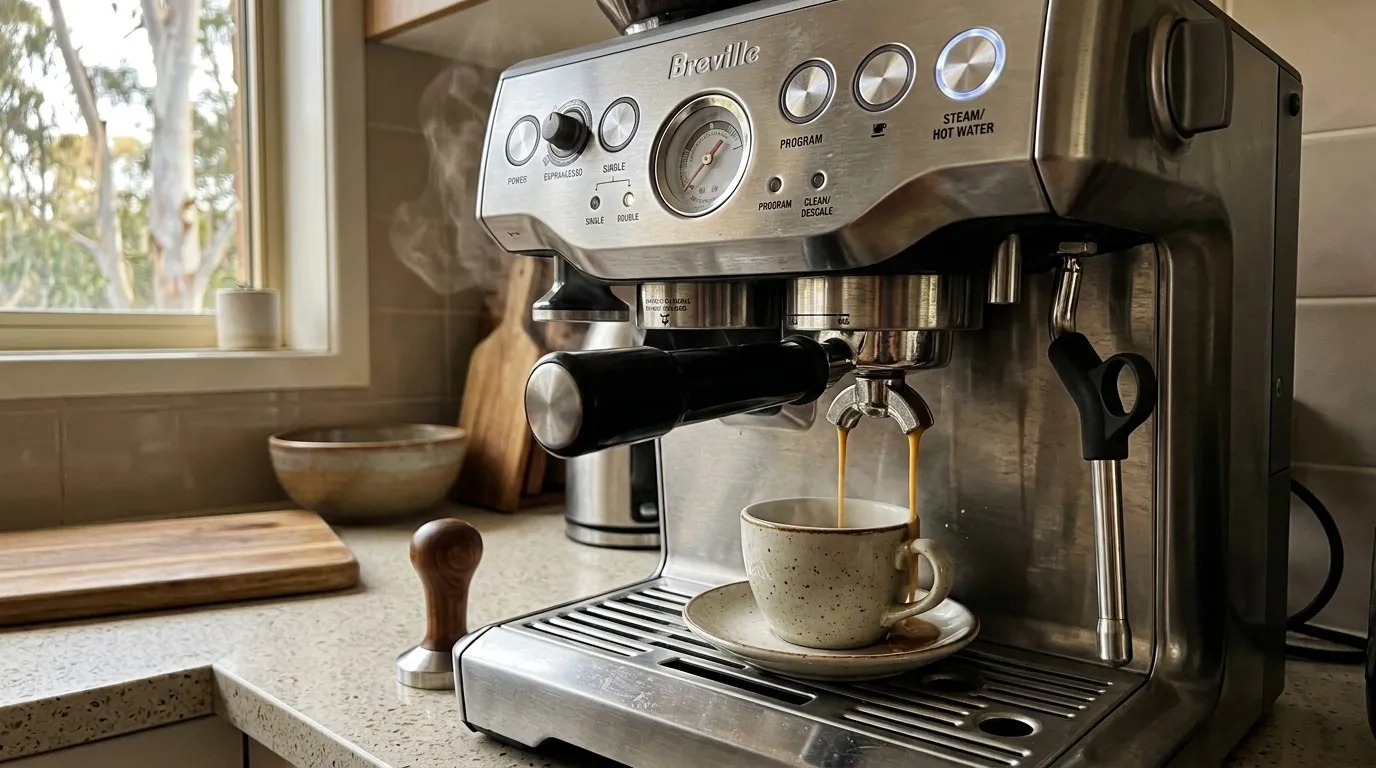
Key takeaway: Every coffee machine heats water and forces it through ground coffee, but the way it forces that water through is what actually separates the types. Pump espresso machines build around 9 bar of pressure at the puck, capsule machines pierce or scan a sealed pod to control the brew automatically, and filter machines rely on nothing more than gravity.
Strip away the branding and every coffee machine is doing the same two jobs: heating water to close to boiling, then pushing that water through ground coffee to pull flavour, oils and caffeine out of it. What changes between an espresso machine, a pod machine, a bean-to-cup unit and a filter machine is how that water gets pushed through, and how much control you have over the process. A pump espresso machine forces water through under real pressure. A capsule machine does the same job but hides most of the decisions inside a sealed pod. A filter machine skips pressure altogether and lets gravity do the work.
How the Main Machine Types Actually Work
| Machine type | How it forces water through the coffee | What you get |
|---|---|---|
| Pump espresso | A vibration or rotary pump builds pressure, pushing water through a portafilter packed with ground coffee | Espresso with crema, full control over grind and dose |
| Capsule or pod | Needles pierce the pod, or a barcode is scanned, and the machine sets water volume and pressure automatically | Consistent single serves, minimal hands-on control |
| Bean-to-cup automatic | A built-in grinder doses fresh beans straight into the brew chamber, then pumps water through in one cycle | Fresh-ground espresso-style drinks with little manual work |
| Filter or drip | Heated water drips by gravity through a paper or metal filter | A larger volume, milder body, no crema |
| Moka pot (stovetop) | Steam pressure building in the bottom chamber pushes water up through the grounds | Strong, concentrated coffee, no electricity needed |

Pump Espresso Machines
A pump espresso machine, whether it’s a manual lever-free model or a semi-automatic one with a built-in grinder, works by heating water in a boiler or thermoblock, then using a pump to force that water through tightly packed, finely ground coffee in a portafilter at speed. The resistance from the grounds and the pressure from the pump together create espresso’s signature crema, the thin layer of golden foam on top. This is the category where you have the most control, and also the most room to get grind size, dose and tamping wrong.
Capsule and Pod Machines
A capsule machine hides the same basic job inside a sealed pod. Needles pierce the capsule on both ends, water is heated and pumped through under pressure, and the whole cycle runs on a preset program built around that specific pod. Nespresso’s Vertuo system goes a step further, reading a barcode printed on each capsule so the machine can automatically set the brew size and rotation speed for that exact pod, rather than using one fixed program for everything. The trade-off for that consistency is control: you’re relying on the pod’s own design rather than adjusting grind or dose yourself.
Bean-to-Cup (Automatic) Machines
A bean-to-cup machine folds grinding, dosing and brewing into a single automatic cycle. Whole beans sit in a hopper, a built-in grinder doses a measured amount straight into the brew chamber for each cup, and the machine pumps heated water through it the same way a manual espresso machine would. Because the beans are ground fresh right before brewing rather than pre-ground and sealed, flavour tends to hold up better over time than with pre-ground coffee, though you lose the manual control a lever machine gives you over grind size and tamping pressure.
Filter and Stovetop Methods
Filter and drip machines skip pressure altogether. Heated water simply drips over ground coffee sitting in a paper or metal filter, and gravity pulls it through into the jug below. It’s a gentler extraction that produces a larger, milder cup without crema. A moka pot works differently again: it has no pump or electricity at all, and instead relies on steam pressure building in a sealed lower chamber to force water up through a middle basket of grounds and into the top chamber, producing something closer to a strong, concentrated coffee than a true espresso.
The Bar Pressure Number on the Box
Here’s where a lot of marketing overstates things. A machine advertised at 15, 19 or even 20 bar isn’t actually brewing at that pressure, it’s stating the maximum the pump can generate. Almost every quality machine uses an over-pressure valve that limits the pressure that actually reaches the coffee puck to around 9 bar, which is the pressure espresso professionals consider ideal for proper extraction. Pushing well past that tends to over-extract the coffee and pull out bitter, harsh flavours rather than improving anything. A higher bar rating on the box mostly buys the pump some headroom to stay stable as the puck ages and resists flow, not a stronger shot.
Understanding how your machine actually works makes troubleshooting a lot easier too. If yours is a pump espresso machine and you’re chasing down a fault, our generic guide to descaling a coffee or espresso machine is a good starting point, alongside our brand-specific guides for Breville and DeLonghi machines. If you’re running a capsule system instead, our Nespresso cleaning and descaling guide covers that side of upkeep. And if you’re still deciding which type of machine actually suits your kitchen, our guide to choosing the best coffee machine walks through the full decision.
Frequently Asked Questions
What pressure does an espresso machine actually brew at?
Around 9 bar at the coffee puck, regardless of what the box advertises. Most machines rated at 15 bar or higher use an over-pressure valve to cap the actual brewing pressure at that ideal level.
Is a bean-to-cup machine the same as an espresso machine?
It uses the same pump-and-pressure principle, but a bean-to-cup machine automates the grinding and dosing steps too, so beans go straight from the hopper to the brew chamber without you measuring or tamping anything.
How does a Nespresso Vertuo machine know how much water to use?
It reads a barcode printed around the rim of each capsule, which tells the machine exactly what brew size and spin speed to use for that specific pod, rather than running one fixed program for every capsule.
Why doesn’t a moka pot need electricity?
It relies on steam pressure building in a sealed lower chamber over a stovetop flame or hotplate, which pushes water up through the grounds and into the top chamber on its own, without any pump.
