

A coffee machine descaler is a mild acid solution, usually citric acid, sulfamic acid or a manufacturer’s own proprietary blend, that dissolves the mineral scale (limescale) Australian tap water leaves behind inside a machine’s boiler, valves and internal tubing every time it heats water. The best coffee machine descalers in Australia fall into two distinct categories: universal products that work across most machine brands, and brand-proprietary solutions sold specifically for one manufacturer’s own range. Mixing the two up is where most of the confusion, and a fair few warranty disputes, actually starts.
Format is the first real point of difference. A descaler comes as a loose powder you measure yourself, a pre-dosed powder sachet, a liquid concentrate poured straight into the tank, or, mostly on premium automatic machines, a two-phase tablet system. Active ingredient is the second: citric acid is the cheapest and most common, sulfamic acid works faster and is favoured by a handful of specialty brands, and several manufacturers, DeLonghi and Jura among them, sell a proprietary formula they will not fully disclose. Machine compatibility is the third, and it is not a minor detail: a universal descaler is built to be safe across brands, while a brand-proprietary product is formulated, and in at least one case contractually tied to the warranty, for one manufacturer’s machines only.
So how often does this actually need to happen? It depends on where you live. Every major brand’s own guidance, and CHOICE’s, points to the same thing: descale frequency comes down to local water hardness, not a fixed number stamped on the box. Two to three months is a reasonable default for most Australian households on mains water, but Perth and Adelaide sit on noticeably harder water than Melbourne, which means a household in those cities can burn through a bottle of descaler twice as fast as one two states away while doing nothing wrong at all.
This guide covers descaling solutions currently sold in Australia, both universal and brand-specific, built from Australian enthusiast-forum discussion (CoffeeSnobs, Whirlpool Forums), manufacturer AU warranty terms fetched directly, and productreview.com.au where an actual listing exists, which for this category turned out to be rarer than expected. Ten products was the original target; nine made the cut on real, distinguishable evidence, and where the evidence for a product is thin, that is stated plainly, not glossed over. It does not cover the machines themselves; see the buying guide for choosing a coffee machine for that side of the equation.
Cafetto’s Renew descaler leads this list as the strongest Australian-relevant universal pick: an Australian-founded company with real specialty-retailer depth and direct Whirlpool Forums mentions, even without a hard star rating to point to. If you own a Jura, buy Jura’s own tablets regardless of price: it is the one brand in this research pass with an explicit, directly-sourced Australian warranty clause tying cover to using its own branded product.
The 9 Best Coffee Machine Descalers in Australia Compared
| Product | Format | Compatibility | Key Spec |
|---|---|---|---|
| Cafetto Renew Descaler | Powder sachet | Universal | Australian-made, purpose-built for coffee equipment |
| Loose Citric Acid | Loose powder | Universal | Cheapest option checked, strong forum consensus |
| Durgol Swiss Espresso Special/Universal | Liquid concentrate | Universal | Single-dose sulfamic acid formula |
| Melitta Anti Calc Bio | Liquid concentrate | Universal | Biodegradable, supermarket and specialty availability |
| Breville Descaler | Powder sachet | Breville only | Matched to Breville’s own descale-mode cycle |
| DeLonghi EcoDecalk | Liquid concentrate | DeLonghi only | Non-acetic formula, avoids DeLonghi’s vinegar warning |
| Nespresso Descaling Kit | Liquid concentrate kit | Nespresso only | Matched to Original and Vertuo descale cycles |
| Jura 2-Phase Descaling Tablets | Tablets | Jura only | Explicit AU warranty clause requires Jura-branded tablets |
| Smeg Descaler | Liquid concentrate | Smeg only | Smeg also approves select third-party alternatives |
How I Compared It
I started the same way as every post in this series, with productreview.com.au, and this category came back close to empty. Individual descaling products, unlike the machines themselves, mostly do not have their own listings; the only one I found with real review data was Coles’ own Ultra Coffee Machine Descaler, sitting on a single one-star review that calls it “watered down vinegar.” Actually, that is the only individual descaling product I found with any review data at all in this entire pass. From there I leaned on Whirlpool Forums and CoffeeSnobs threads read directly, each brand’s Australian warranty and support pages fetched directly, not lifted from a search summary, and mainstream AU retailers (JB Hi-Fi, Harvey Norman, Coffee Parts, Myer, Woolworths, Bing Lee) purely to confirm each product is real, current and sold locally, never as a citation.
Reddit could not be fetched directly in this research pass, so nothing below rests on an unverified Reddit claim; anything forum-sourced is attributed to a specific Whirlpool or CoffeeSnobs thread I actually read. Puly Caff-style products were researched and then dropped entirely: forum discussion is clear that this is a cleaning detergent, not an acid descaler, and lumping the two together would be misleading, not helpful in practice. Sunbeam’s own descaler was also researched but left off this specific list: a real product with confirmed AU retail listings, but nothing beyond that: no forum thread, no review data, no distinguishing detail I could stand behind, which is exactly the bar Section 4 sets for leaving something out rather than padding to ten.

1. Cafetto Renew Descaler – Best for Most Machines
Cafetto is an Adelaide-founded company, which on its own would be a nice detail and nothing more, except its Renew descaler also turns out to be the most consistently mentioned universal product across the Australian specialty-coffee retail chain: Coffee Parts lists it as an authorised stockist, and it shows up again at Barista Warehouse, Alternative Brewing and Eastlink Espresso. A Whirlpool Forums thread on descaling options names Cafetto specifically as a recommended commercial-grade choice, a step up from the generic “buy a reputable brand” advice you get everywhere else.
It comes as single-use powder sachets, dissolved into the tank the same way as any citric-based descaler, and it is formulated specifically for coffee equipment instead of being repurposed from a general household cleaning product (more on why that distinction matters two entries down). Compare that with the loose citric acid below: Cafetto costs more per use, but there is no guessing at your own dosing ratio, and the sachet format means there is nothing to measure.
The honest gap here is that no aggregate consumer rating exists for Renew on productreview.com.au, so this pick rests on retail depth and forum mentions, not a star rating, and that is worth knowing rather than glossing over. If a machine is not one of the specific brands covered further down this list, my generic descaling guide walks through the actual process for any machine using a citric-based product like this one.
Pros
- Australian-founded company with real specialty-retail depth, not just one stockist
- Purpose-built for coffee equipment, not a diverted household cleaner
- Named directly in Whirlpool Forums discussion as a recommended commercial-grade option
Cons
- No aggregate consumer star rating found on productreview.com.au for this specific product
- Costs more per use than plain loose citric acid for a chemically similar job

2. Loose Citric Acid (e.g. McKenzie’s) – Best Budget Option
Ask around any Australian coffee forum for the cheapest way to descale a machine and the same answer comes back again and again: plain citric acid, sold as a baking or preserving ingredient at every major supermarket, works. Whirlpool Forums threads on the topic treat it as the default DIY option, not a compromise, and CoffeeSnobs contributors say much the same thing. Cheap. Plentiful. Hard to get wrong. It is the cheapest product on this entire list by a wide margin, and it is close to consensus, not a fringe recommendation.
The catch, and it is a real one, is working out your own dose and concentration rather than following a pre-measured sachet or bottle. Measure it into warm water and it dissolves with a faint citrus smell you would not get from a proprietary sachet. One CoffeeSnobs contributor warned that going too strong with a homemade descaling mix can strip lubricant off internal cam and valve pins, a mechanical risk that a purpose-dosed product like the Cafetto above is built to avoid. Get the ratio right (most home baristas land somewhere around a tablespoon or two per litre of water, though the machine’s own manual is the actual authority) and it works as well as a branded citric product for a fraction of the outlay.
Pros
- Cheapest option checked across every AU retailer in this research pass
- Strong, repeated grassroots endorsement across multiple Whirlpool and CoffeeSnobs threads
- Sold at every major supermarket, no specialty retailer trip required
Cons
- No pre-measured dose, so getting the ratio wrong is a real (if avoidable) risk
- Not formulated specifically for coffee equipment the way a dedicated product is
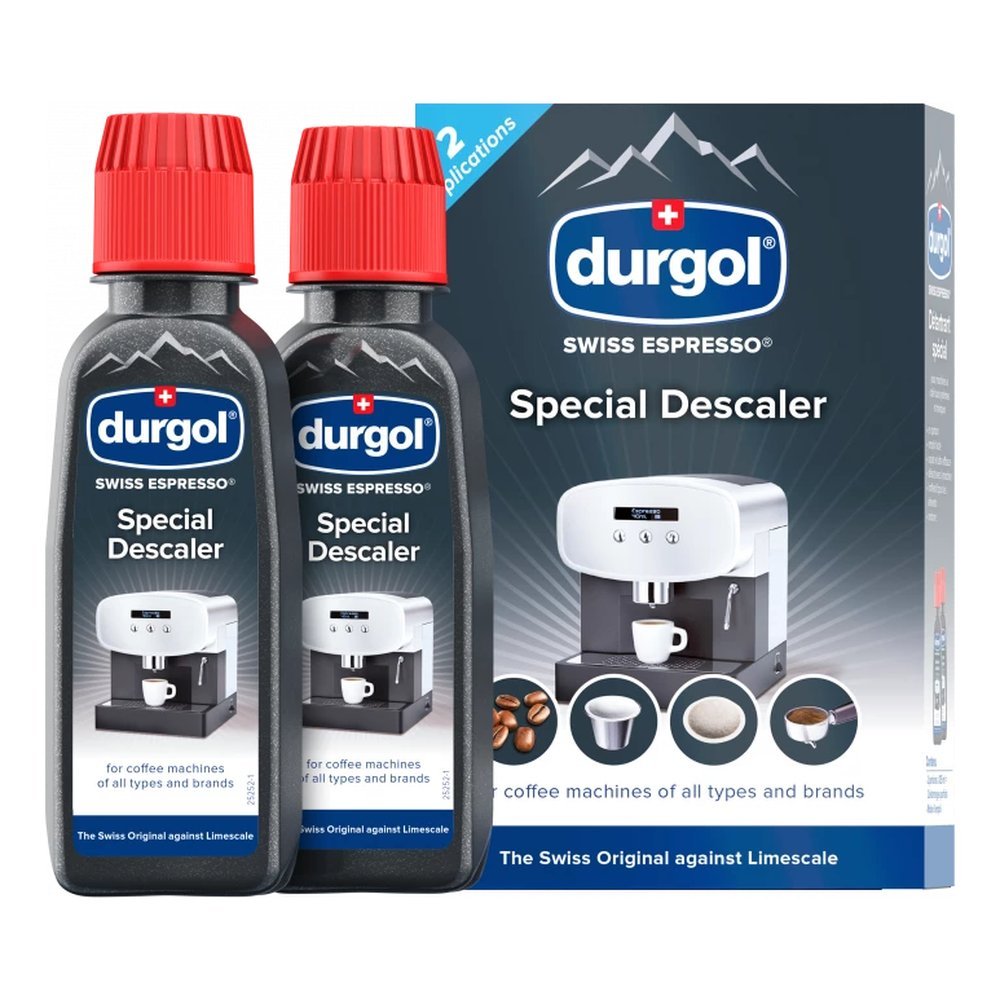
3. Durgol Swiss Espresso Special/Universal Descaler – Best for a Single-Dose Premium Clean
Durgol is the descaler sitting next to the machines themselves at a proper specialty retailer (Barista Warehouse and The Coffee Filter Shop both carry it), and it is built around sulfamic acid as opposed to citric acid. It comes in single-dose bottles: one bottle, one descale, no measuring cup, no guesswork, the opposite approach to the loose citric acid two entries up.
No Australian productreview.com.au listing or specific AU forum thread naming Durgol directly turned up in this research pass, the same honest gap Cafetto carries, so this entry rests on established international reputation and confirmed local specialty-retail availability, not a sourced review number. Marketing copy claims a faster contact time than citric-based descalers thanks to the sulfamic acid formula; independent Australian testing confirming or disputing that specific claim was not found, so treat it as the manufacturer’s position, not a verified fact.
Pros
- Single-dose format removes any dosing guesswork entirely
- Established international specialty brand with real Australian retail depth
- Sulfamic acid formula marketed on faster contact time than citric-based options
Cons
- No Australian consumer review or forum data found to confirm the effectiveness claims independently
- Premium pricing relative to the citric-based options above
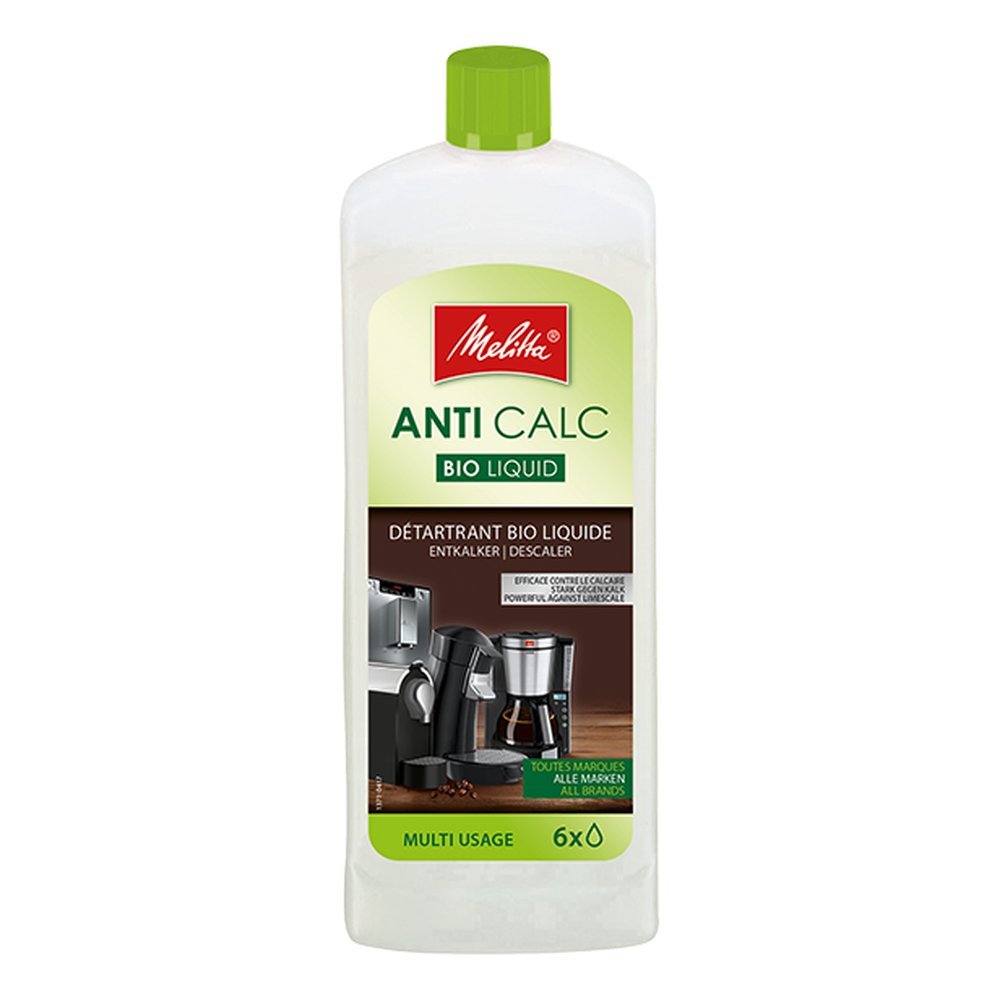
4. Melitta Anti Calc Bio Liquid Descaler – Best for a Biodegradable Option
Melitta’s Anti Calc Bio is the rare descaler that shows up in both worlds at once: sold on the shelf at Woolworths and also stocked by specialty retailers such as Coffee Parts, Barista Warehouse and Di Pacci. Well, almost rare: Melitta is arguably the exception here, not the rule, since most of this list sits firmly in one channel or the other.
It is a biodegradable, citric-acid-based liquid concentrate, and a 250ml bottle is good for roughly six uses, so it sits closer to the loose citric acid on ongoing cost than to Durgol’s single-dose premium format above, while still giving a pre-formulated liquid, not a powder to measure. No independent Australian review data turned up for it specifically, the same gap that runs through most of this list outside the one Coles product named in the methodology section above.
Pros
- Wide availability spanning both supermarket and specialty retail channels
- Biodegradable formulation for anyone specifically wanting a lower-impact product
- Multi-use bottle works out cheaper per descale than a single-dose product
Cons
- No independent AU review evidence found
- Liquid concentrate still needs measuring per use, unlike a pre-dosed sachet

5. Breville Descaler – Best for Breville Machines
Breville does not publish exactly what is in its own descaler powder, which makes it hard to compare on paper against a citric or sulfamic product by ingredient alone. What Breville’s own Australian warranty terms, fetched directly, do confirm is that a claim can be knocked back if there is evidence the machine was never regularly descaled at all: scale damage inside a boiler or group head is treated as a maintenance failure. That is a meaningfully different, and more defensible, rule than requiring one specific brand, and it is worth knowing before assuming the worst.
A CoffeeSnobs thread on descaler choice put the general principle plainly: a machine is valuable and not worth risking on a cheap, unproven product. Buying Breville’s own descaler sidesteps that question entirely for a Barista Express, Bambino or any other machine in the range, since it is dosed to match the brand’s own descale-mode cycle exactly, so there is no adapting a generic product’s instructions to a different machine’s cycle length.
It costs more than the loose citric acid or even the Melitta liquid above for what is, chemically, a comparable descaling job, and because Breville will not disclose the active ingredient, there is no way to directly benchmark it against the universal options on this list. For the full process on a Breville specifically, my guide to descaling a Breville coffee machine covers the exact light sequence and timing for the range.
Pros
- Matched to Breville’s own descale-mode cycle, no adapting instructions
- Removes any doubt about whether a warranty-relevant descaling question can be answered
- Widely available anywhere Breville machines are sold
Cons
- Costs more than a generic citric option for a comparable chemical job
- Breville does not publish its active ingredient, so it cannot be directly benchmarked
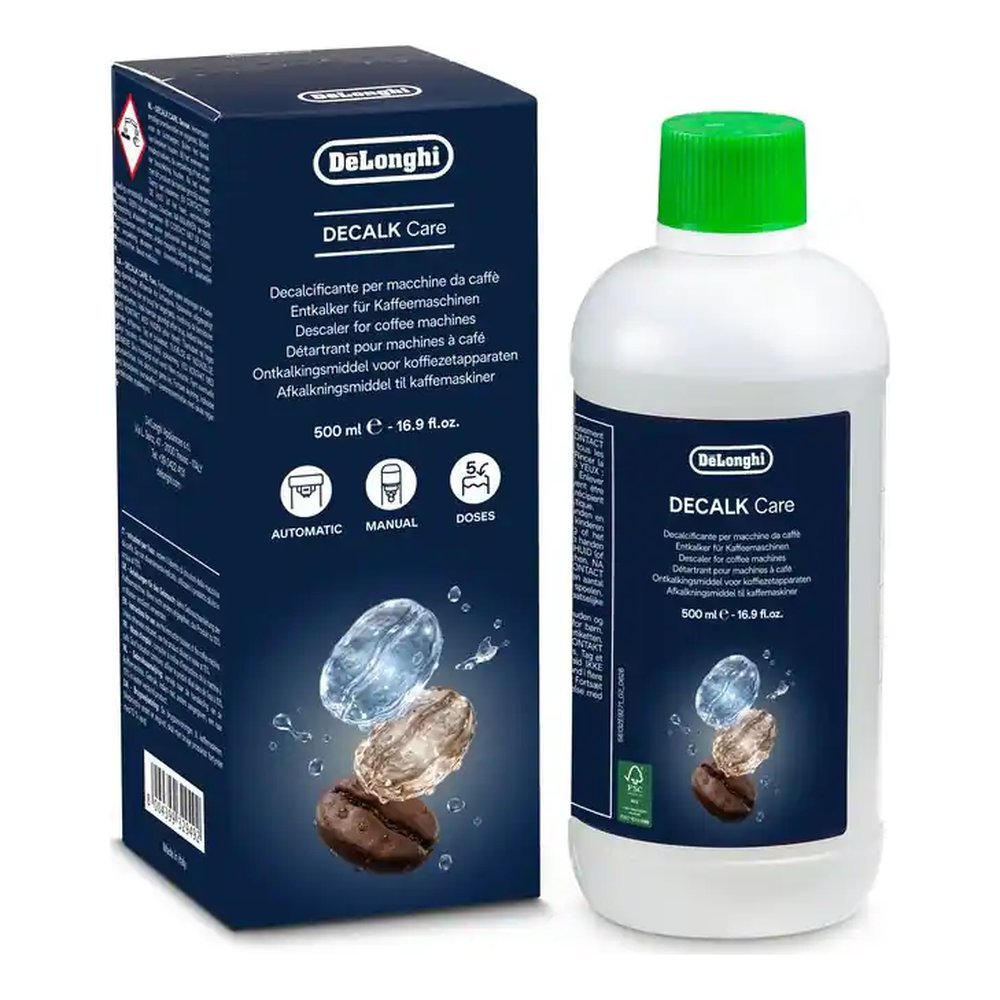
6. DeLonghi EcoDecalk – Best for DeLonghi Machines
Here is a specific reason to reach for DeLonghi’s own EcoDecalk rather than whatever is in the pantry: a Whirlpool Forums thread on descaling quotes DeLonghi’s own manual stating that using an acetic-based acid, meaning vinegar, will void the warranty. That is a real, specific, sourced warning, scoped to vinegar, not descalers broadly, which matters because the same thread also noted that Breville’s manual, by comparison, actually recommends a diluted vinegar solution in some circumstances. Two different manufacturers, two different answers, so a machine’s own manual still overrides general advice either way.
EcoDecalk itself is a proprietary liquid concentrate, confirmed for sale at JB Hi-Fi and Harvey Norman as well as DeLonghi’s own store, and it is formulated as a non-acetic alternative, which lines up with the warranty language above. No independent AU review data for the product itself turned up, only the retail confirmation and the forum-sourced warranty detail.
Pair EcoDecalk with the actual button sequence and timing in my guide to descaling a DeLonghi coffee machine, which covers both the bean-to-cup and manual ranges.
Pros
- Real, forum-sourced reason to avoid grabbing vinegar for a DeLonghi machine
- Wide mainstream retail availability, not limited to specialty coffee shops
- Non-acetic formula matches DeLonghi’s own stated warranty concern directly
Cons
- No independent AU consumer review data found for EcoDecalk specifically
- The sourced warranty warning applies to vinegar specifically, not to every generic descaler
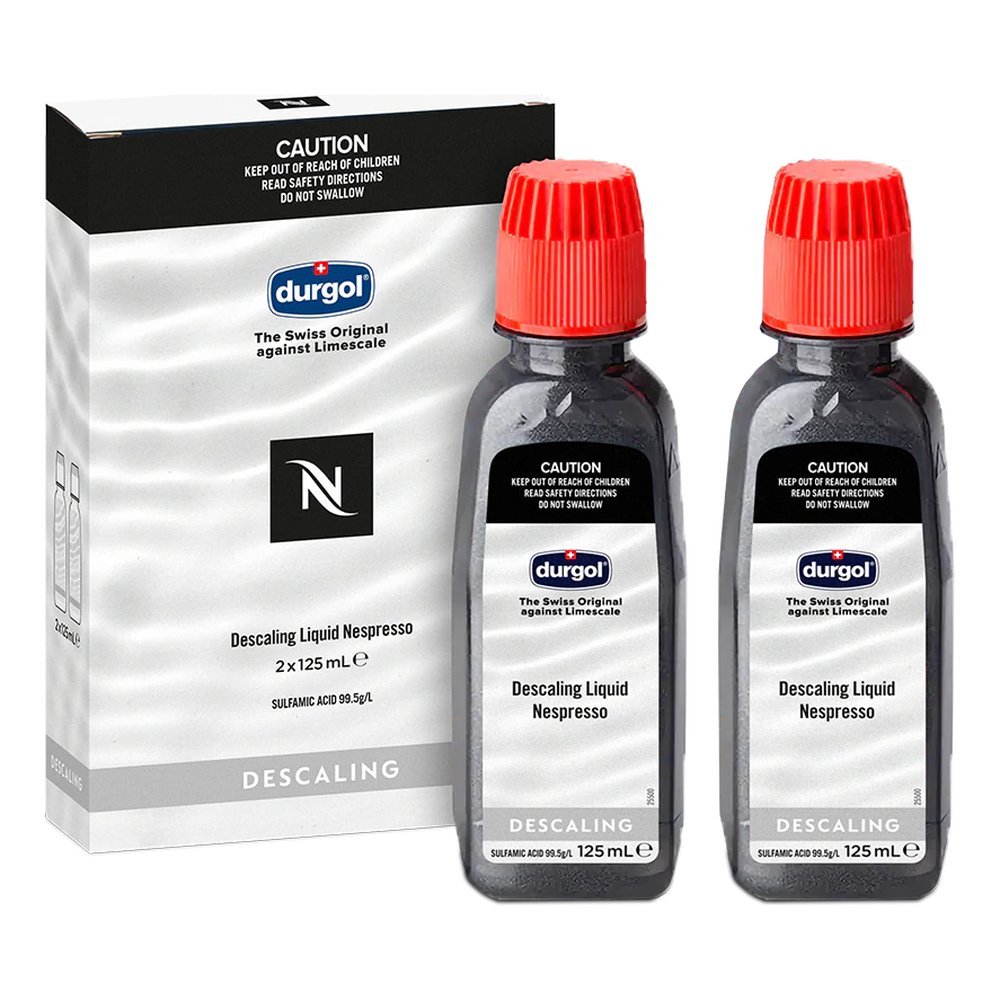
7. Nespresso Descaling Kit – Best for Nespresso Machines
Nespresso ties its recommended descaling interval to capsule count as opposed to a flat number of months, and that interval differs meaningfully between the two systems: Original line machines go longer between descales than Vertuo machines do, so check which system is actually owned before assuming a fixed schedule from a friend’s different machine. The kit itself is a simple, single-purpose liquid built to match the brand’s own descale-mode cycle.
That simplicity is really the whole pitch. Well, most of it. For an appliance most owners want to spend zero mental effort maintaining, not having to work out a dose or a ratio is worth something on its own. The trade-off is the same one that runs through every brand-proprietary product on this list: a third-party generic descaler exists and would cost less, and while Nespresso’s own support material warns generally against non-approved maintenance products, a specific, detailed public rationale beyond that general language could not be verified in this research pass, so it is not being overstated here as a hard warranty rule the way Jura’s clause below actually is.
My guide to cleaning and descaling a Nespresso machine covers the button sequence for both the Original and Vertuo lines side by side.
Pros
- Matched to Nespresso’s own descale-mode cycle, nothing to measure or adapt
- Low-effort for an appliance most owners want to maintain and forget
- Confirmed AU price point and wide availability through Nespresso’s own boutiques and store
Cons
- No independent AU review data found for the kit itself
- Ties buyers into repurchasing a proprietary kit in place of a cheaper generic alternative
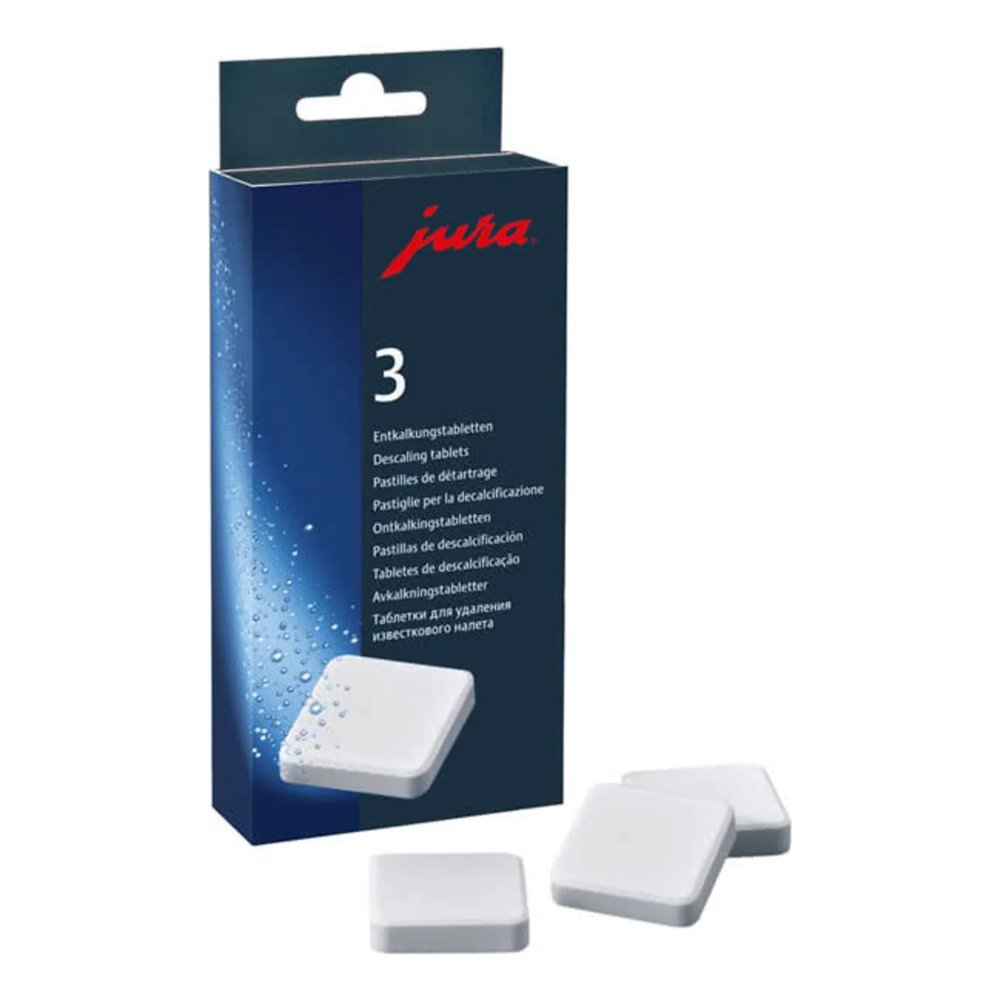
8. Jura 2-Phase Descaling Tablets – Best for Jura Machines
This is the one entry on the entire list backed by an actual, directly-sourced warranty clause, not general “reputable brand” advice. Jura’s own Australian warranty policy states outright that damage caused by descaling or cleaning tablets other than JURA branded products falls outside cover. It is the manufacturer’s own published Australian warranty text, not a forum paraphrase or a marketing claim.
For a machine at this price point, that single sentence changes the maths on generic descalers entirely: the money saved using loose citric acid is not worth the argument that would follow if something failed and a service centre found non-Jura tablet residue in the boiler. It is worth noting that a separate reseller’s warranty page checked in this research pass did not carry the same clause, so this specific requirement traces back to Jura’s own Australian terms, not to something universal across every seller of the machines.
Pros
- The clearest, directly-sourced AU warranty clause found anywhere in this research pass
- Removes any argument about what caused internal damage if a claim is ever needed
- Purpose-formulated two-phase system matched to Jura’s own automatic descale cycle
Cons
- No independent consumer review data found
- Premium pricing, consistent with the Jura range’s own positioning generally
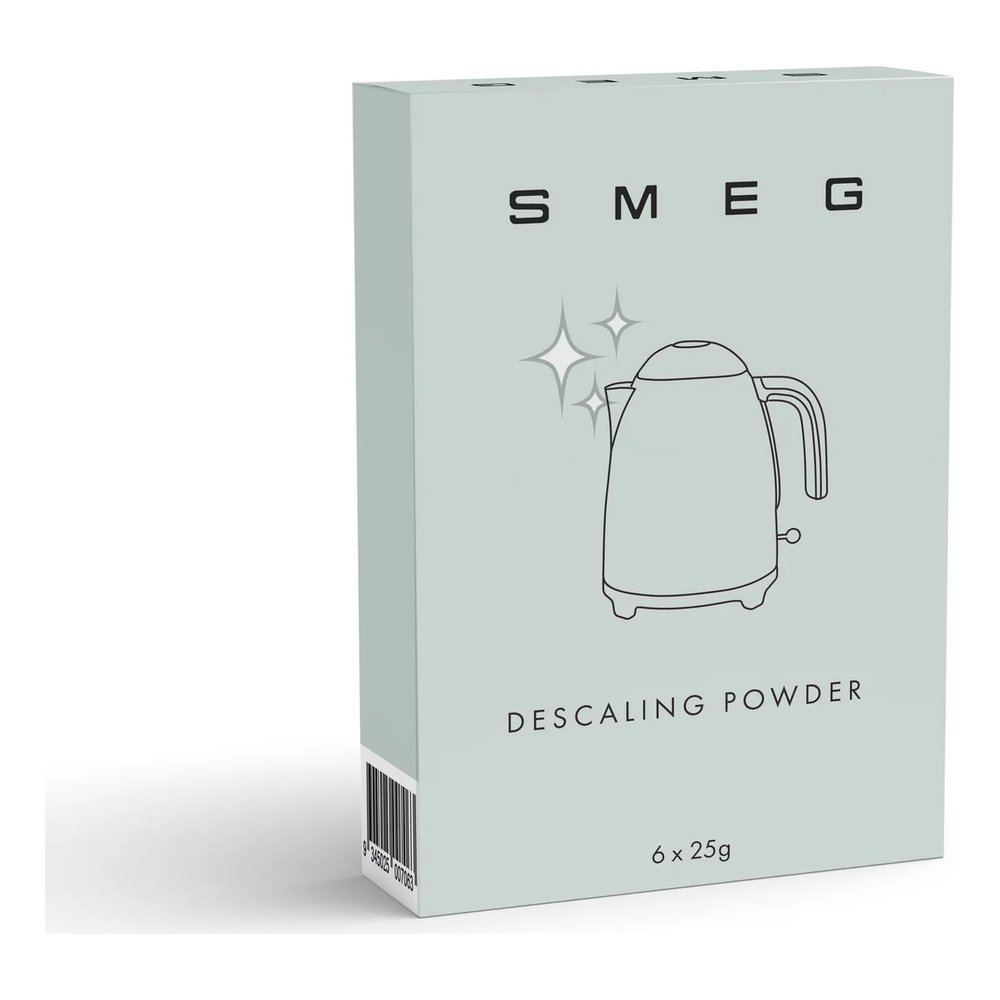
9. Smeg Descaler – Best for Smeg Machines
Smeg is the one brand on this list that is notably more relaxed about the whole question. My own descaling guide for Smeg machines notes the brand accepts another liquid descaler Smeg approves, not only its own branded bottle, a real point of difference from Jura’s strict clause above and worth knowing before paying a premium for the official product specifically.
That flexibility softens the value case for buying Smeg’s own liquid descaler over a universal option, but it remains the simplest choice for anyone who would rather not chase down which third-party products Smeg has actually approved. It is confirmed for sale through Myer, Harvey Norman and Smeg’s own Australian store, though, as with most of the brand-proprietary products here, no independent consumer review data exists for it specifically.
Pros
- Smeg’s own guidance is comparatively flexible on descaler brand, unlike Jura
- Wide mainstream retail availability
- Simplest choice for anyone who does not want to chase down approved alternatives
Cons
- No independent AU review data found
- Weaker value case than most brand-proprietary options, since Smeg itself allows approved alternatives
How to Choose a Coffee Machine Descaler
Match the format to how much patience the job deserves. A pre-dosed sachet or single-shot liquid bottle removes any dosing decision entirely, which is worth paying for if measuring is not something you want to bother with. Loose citric acid asks a bit more but rewards it with a meaningfully lower ongoing cost. Canstar Blue’s coffee machine maintenance guide recommends folding descaling into a monthly routine instead of waiting for a warning light, a more proactive stance than most manufacturers’ own minimum guidance.
Check whether a brand actually requires its own product before buying on price alone. Jura’s warranty terms are explicit about this. Breville, DeLonghi and most other brands tie cover to whether the machine was maintained at all, not to which brand of descaler did the maintaining, which is a meaningfully lower bar to clear.
Do not assume a supermarket own-brand bottle is automatically the safe budget option just because it sits next to the branded products on the same shelf. Coles’ own Ultra Coffee Machine Descaler carries a single productreview.com.au review, and it is not a good one: the reviewer describes it as diluted vinegar and recommends checking the ingredients before trusting it. One review is not a verdict on the whole product, but it is a real, sourced red flag worth knowing before buying on price alone.
Keep Your Machine Running
Breville owners: day-to-day cleaning is a separate job from descaling entirely. My guide to cleaning a Breville coffee machine covers the group head, steam wand and drip tray upkeep that keeps scale-related problems from building up between descales in the first place.
The same split applies to DeLonghi: my guide to cleaning a DeLonghi coffee machine covers the milk system and brew unit maintenance that sits alongside, not instead of, the EcoDecalk routine above.
Nespresso owners get this covered in one place instead of two. My combined cleaning and descaling guide walks through the everyday capsule-container and drip-tray upkeep a pod machine needs on top of its regular descale.
And for a Smeg machine, the same combined approach applies. My Smeg descaling and cleaning guide covers both jobs for the ECF01 and BCC02 side by side.
Frequently Asked Questions
How often should I descale my coffee machine in Australia?
Every two to three months is a reasonable general default, but the real answer depends on local water hardness. Perth and Adelaide have noticeably harder water than Melbourne, so machines there scale up faster. Most machines with a descale-alert light will signal before a fixed schedule does, so treat that light as the more reliable signal.
Can I use a generic descaler in a Breville, DeLonghi or Nespresso machine?
For Breville and Nespresso, a generic descaler will not automatically void the warranty; cover is tied to whether the machine was maintained at all. DeLonghi’s manual specifically warns against acetic-based acid (vinegar), not descalers generally. Jura is the exception: its Australian warranty explicitly excludes damage from non-Jura branded tablets, so use the official product there.
What is the difference between a descaler and a product like Puly Caff?
They solve different problems. A true descaler (citric acid, sulfamic acid or a proprietary blend) dissolves mineral scale from water pathways. Puly Caff-style products are cleaning detergents for coffee oil and residue, not acidic descalers. Using one instead of the other leaves the actual job undone.
Is vinegar safe to use as a coffee machine descaler?
It depends entirely on the brand. A Whirlpool Forums thread quotes DeLonghi’s own manual stating that acetic-based acid, meaning vinegar, voids the warranty. The same thread notes Breville’s manual actually recommends a diluted vinegar solution in some cases. Check a machine’s own manual rather than assuming either answer applies to it.
Does local water hardness really affect how often I need to descale?
Yes, and it is not a minor factor. CHOICE’s own guidance states descale frequency comes down to local water hardness, not a fixed interval. Perth and Adelaide sit on harder water than Melbourne, so two households running the same machine can end up needing different descaling schedules despite doing nothing differently day to day.
What happens if I never descale my coffee machine?
Mineral scale builds up inside the boiler, valves and internal tubing, which reduces heating efficiency, can affect the taste of the coffee, and eventually leads to the kind of internal damage that Breville’s and other manufacturers’ warranty terms exclude as a maintenance failure. It is a slow problem until it suddenly is not.
Verdict
Cafetto’s Renew leads, but if a Jura is on the bench, buy the Jura tablets regardless.
Cafetto’s Renew earns the top spot as the best-supported universal option for most Australian households, on the strength of real specialty-retail depth and direct Whirlpool Forums mentions, even without a hard star rating to point to. For a tighter budget, loose citric acid does the same chemical job for a fraction of the cost for anyone comfortable measuring their own dose. The one clear exception to shopping on price alone is Jura: its explicit Australian warranty clause makes the official tablets the only sensible choice for anyone who owns one, regardless of what a generic product would cost instead.
