
A coffee machine cleaner is a purpose-made detergent, sold as a powder, a tablet or a liquid, built to strip the coffee oils, protein residue and grounds that build up inside a machine’s group head, brew unit, portafilter baskets and milk system, the layer of buildup that turns a bright shot bitter and stale long before the machine is actually broken. It does a different job to descaling, which targets mineral scale left behind by your tap water rather than coffee residue itself, and the two are easy to confuse when a box on the shelf claims to handle both. Whether you run a manual espresso machine, a bean-to-cup automatic or a pod machine, these are the best coffee machine cleaners Australia has on shelf right now for keeping that oily buildup from ruining your next cup.
Cleaners split into a few distinct types. Backflush powders, the classic tub or sachet dissolved in a blind filter and cycled through a manual or semi-automatic machine’s group head, are the workhorse of the category and the only type that actually reaches the parts a wipe-down cannot. Tablets do a similar job for bean-to-cup and pod machines with a dedicated cleaning cycle, dropped into a chute or reservoir instead of backflushed by hand. A separate liquid category exists purely for milk systems, the steam wand or automatic frother that clogs with dried milk protein faster than most owners expect. Universal tablets, formulated to work across several machine brands at once, sit alongside brand-specific options from Breville, DeLonghi and Jura built around one machine’s exact cleaning cycle.
The number worth remembering here is not a price but a frequency. CHOICE recommends backflushing or running a cleaning cycle with a commercial cleaner roughly once for every 4kg of coffee that passes through a machine, which for an average home user lands somewhere between weekly and fortnightly. Milk systems need attention more often again, daily if you are steaming milk every morning, since dried protein left sitting in a steam wand overnight is a real food hygiene issue and not just a taste one.
This list covers backflush powders and detergents for espresso machines, tablets for bean-to-cup and pod machines, and dedicated milk system liquids, not descaling solution and cleaning tablets specifically, which get their own separate roundup since descaling is a genuinely different maintenance job aimed at mineral scale instead of coffee residue. If you are still working out which machine type you actually own or want next, our guide to choosing the best coffee machine covers that ground, and CHOICE’s own guide to cleaning a coffee machine is a solid independent starting point on how often the job actually needs doing.
Urnex Cafiza leads this list because it is the backflush powder enthusiast forums repeatedly name ahead of every alternative, praised specifically for dissolving fast and rinsing cleaner than the rest of the pack, with wide Australian stock through mainstream online retailers.
Best Coffee Machine Cleaners Australia Compared
| Product | Type | Best For | Key Spec |
|---|---|---|---|
| Urnex Cafiza | Backflush powder | Espresso machine group heads | Fast dissolve, low-residue rinse |
| Puly Caff Plus | Backflush powder | Espresso machines, NSF certified | Dense foaming action, 370g-900g tubs |
| Cafetto Espresso Clean | Backflush powder | Buyers wanting an Australian-made option | NSF P152 certified, no odour rinse |
| Breville Eco Coffee Residue Cleaning Tablets | Tablets | Breville semi-automatics | 1.5g tablets, 40-pack |
| Jura 3-Phase Cleaning Tablets | Tablets | Jura bean-to-cup machines | Three-stage oil and mineral action |
| DeLonghi Cleaning Tabs DLSC552 | Tablets | DeLonghi bean-to-cup machines | Brew-unit specific, compact tablet |
| Urnex Cleancaf | Powder | Pod and drip-style machines | Blue-dye rinse indicator |
| Cafetto Daily Milk Frother Cleaner | Liquid | Steam wands and auto-frothers | Lab-tested against E. coli, Salmonella |
| Urnex Full Circle Equipment Wash | Powder | Eco-conscious backflushing | Phosphate-free, biodegradable |
How We Compared It
Coffee machine cleaners are a thinner review category than the machines themselves, so this list leans on a mix of enthusiast-forum consensus and direct manufacturer verification instead of a large aggregate rating sample. We read home-barista.com and CoffeeSnobs threads on backflush detergent, checked what current Australian retailers such as Coffee Parts, Barista Warehouse, Bing Lee and JB Hi-Fi actually stock under correct Australian naming, and checked claims like Cafetto’s independent lab testing against the source instead of repeating marketing copy unverified.
productreview.com.au does not track cleaning products as its own category the way it does coffee machines themselves, so we used its machine-category pages only for background on which machines these cleaners actually service, and leaned harder on CHOICE and Canstar Blue’s own maintenance guidance for the frequency and hygiene claims behind this list. Two candidates researched but left off this list: a generic multi-brand tablet sold at Bunnings with no dedicated owner reviews behind it anywhere, and a South African-made universal tablet brand with real review volume but no confirmed Australian retail listing. Real stock without evidence, or evidence without real stock, was not enough to earn a slot here.

1. Urnex Cafiza Espresso Machine Cleaning Powder – Best Overall
Cafiza is the name that comes up first in almost every home-barista.com thread on backflush detergent, and the reason given is consistent: it dissolves quickly in warm water, foams enough to do the job without turning into a mess, and rinses cleaner than most of the alternatives sitting next to it on a barista supplier’s shelf. That last point matters more than it sounds. A powder that leaves a faint chemical taste behind after five plain-water flushes is not actually saving you time, it is just moving the problem to your next cup.
Where Cafiza pulls ahead of the Puly Caff Plus entry below is less about raw cleaning power (owners who have used both describe them as doing an equivalent job) and more about how forgiving it is to use correctly. The standard method, five ten-second backflushes with powder followed by five with plain water, is simple enough that new owners get it right on the first go, which is exactly the kind of unglamorous consistency that earns a product this many repeat mentions across forums instead of just one enthusiastic review.
Pros
- Repeatedly named ahead of alternatives in home-barista.com threads for dissolving fast and rinsing clean
- Simple, forgiving method that new owners get right without a learning curve
- Widely stocked in Australia through mainstream online retailers
Cons
- Only works for machines with a group head and blind filter, not bean-to-cup or pod machines
- No large aggregate rating sample exists for this category the way productreview.com.au tracks whole machines, so this rests on forum consensus instead of a review-count figure
If you are running a Breville and this is your first backflush powder, it is worth pairing it with a proper look at cleaning a Breville coffee machine day to day, since a powder alone will not fix a shower screen or group gasket that has not been checked in months.

2. Puly Caff Plus Coffee Machine Cleaner – Best Alternative to Cafiza
Puly Caff Plus is the other half of the duo enthusiast forums keep coming back to, and it is NSF certified for direct contact with food-service equipment, a real, checkable credential instead of marketing language. Stocked in Australia through Coffee Parts, Barista Warehouse and Alternative Brewing, it is developed on a formula going back decades and is trusted by cafes here, not just home users, which says something about how it holds up under repeated commercial-grade use.
The practical difference between this and Cafiza comes down to how it behaves during the flush more than how well it actually cleans. Puly Caff Plus produces a denser foam, which some owners find satisfying to watch work and others just find messier to manage in a home kitchen. Neither product is the clear technical winner here. Pick whichever your local supplier has in stock, since both are correct professional choices and the difference is closer to preference than performance.
Pros
- NSF certified, a specific verifiable credential instead of a vague safety claim
- Used by cafes across Australia, not just a home-market product
- Available in both a bulk tub and single-use sachets depending on how often you flush
Cons
- Denser foam action some home users describe as messier to manage than Cafiza’s
- Same limitation as Cafiza: it only suits machines with a group head, not bean-to-cup or pod machines

3. Cafetto Espresso Clean – Best Australian-Made Option
Cafetto is an Adelaide-based cleaning chemistry company, and Espresso Clean is its core backflush powder, NSF certified to protocol P152, which specifically confirms it will not taint the coffee and will not corrode a machine’s metal parts. A CoffeeSnobs thread asking about the correct method for using it drew detailed, specific replies instead of a shrug, a reasonable sign the product has real local users behind it, not just local shelf space.
It is worth being upfront about the evidence gap here compared to the two picks above it. The clearest customer rating we found for Espresso Clean sits at a full 5 out of 5, but from only two reviews on one retailer’s page, which is nowhere near enough to call it a settled result. That is not a reason to skip an otherwise well-specified, Australian-made product, but it is a smaller sample than the forum consensus behind Cafiza and Puly Caff, and worth knowing before you buy on reputation alone.
Pros
- Made in Adelaide, with local stock and no overseas shipping wait if you run out
- NSF P152 certified specifically for non-corrosive, non-tainting use
- Active local forum discussion on CoffeeSnobs about correct technique
Cons
- The strongest rating figure we found came from only two reviews, far too small a sample to call settled evidence
- Less widely mentioned in enthusiast threads than Cafiza or Puly Caff, so brand recognition outside Australia is thinner
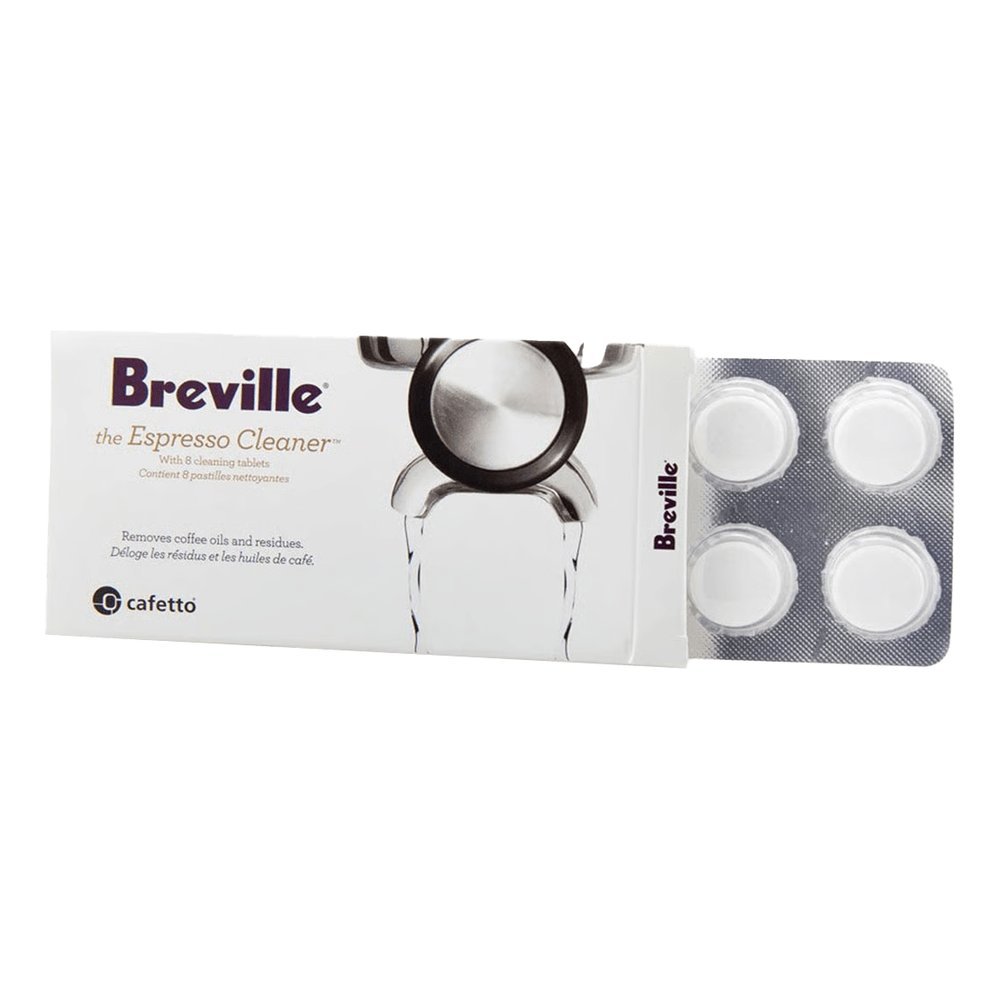
4. Breville Eco Coffee Residue Cleaning Tablets – Best for Breville Machines
Breville’s own cleaning tablets are the factory-recommended option for the Barista Express, Barista Pro and the rest of the brand’s semi-automatic range, sold as a 40-pack and stocked everywhere from Coffee Parts to Officeworks to Bing Lee. Unlike the backflush powders above, these are dropped straight into the machine’s dedicated cleaning cycle instead of manually flushed, which suits an owner who wants the machine to do the timing and dosing for them.
Here is the honest gap in this entry compared to the picks above it: we could not find a body of dedicated, product-specific review commentary on the tablets themselves the way there is for Cafiza or Cafetto. Breville as a brand carries a mixed general reputation on productreview.com.au for customer service, but that figure is about the company’s support experience across its whole appliance range, not a verdict on whether this specific tablet cleans well, and it would be dishonest to blur the two. What we can say with confidence is that the tablets are the factory-specified part for Breville’s cleaning cycle, and using an off-brand tablet in that cycle is the kind of shortcut that occasionally voids a warranty claim.
Pros
- The factory-specified part for Breville’s own cleaning cycle, removing any guessing over dose or fit
- Extremely widely stocked in Australia across mainstream retailers
- Runs through the machine’s automatic cycle instead of a manual backflush
Cons
- Little dedicated review evidence for the tablets specifically, separate from Breville’s broader and more mixed customer-service reputation
- Only suits Breville’s own cleaning cycle, not a universal fit across brands
Worth reading alongside this one: our note on descaling a Breville coffee machine, since a cleaning tablet handles coffee residue only and will not touch the mineral scale a separate descaling routine deals with.
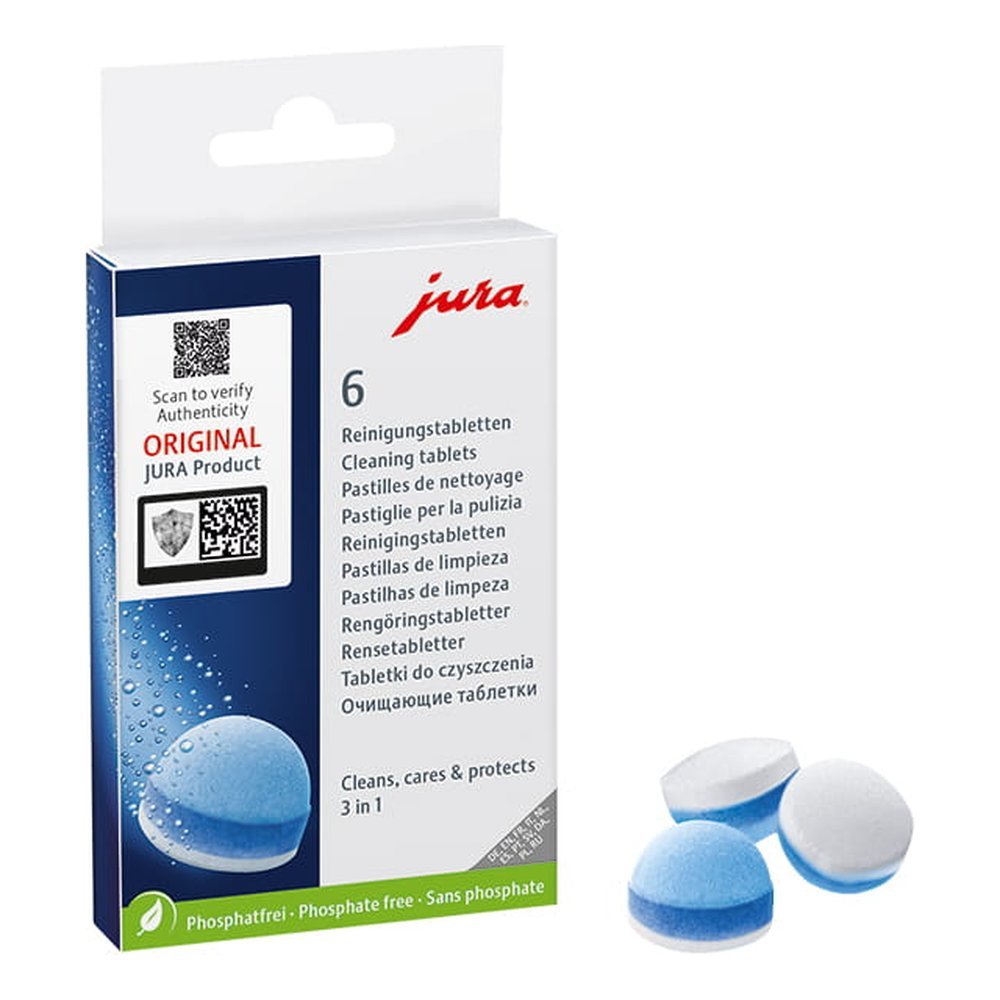
5. Jura 3-Phase Cleaning Tablets – Best for Jura Bean-to-Cup Machines
Jura’s own 3-Phase tablets are built around the machine’s electronically controlled cleaning program, working through the brewing unit in three stages: loosening coffee oils, clearing particles from where the coffee is actually brewed, and helping prevent mineral deposits building up around the internal pipework. That third stage blurs slightly into descaling territory, which is worth naming honestly, but Jura markets and sells it as its cleaning tablet instead of its separate descaling tablet, and stockists including JB Hi-Fi and Bing Lee list it the same way.
For an owner of a premium automatic like the Jura E8, this is less a product you research and more one you simply keep buying, since the machine’s own cleaning prompt expects this specific tablet and the whole point of a bean-to-cup machine is not having to think about the process. Customer feedback we found described it as effective if slow to dissolve, a minor gripe, not a real complaint, and one that has no bearing on whether it actually does the job.
Pros
- Purpose-built to match Jura’s own electronically controlled cleaning program
- Stocked by mainstream Australian retailers including JB Hi-Fi and Bing Lee
- Three-stage action covers more than a single-purpose coffee-oil tablet
Cons
- Some crossover with descaling function makes the category line blurrier than a pure coffee-residue cleaner
- A minor recurring comment describes slower dissolving than expected, though without affecting the result
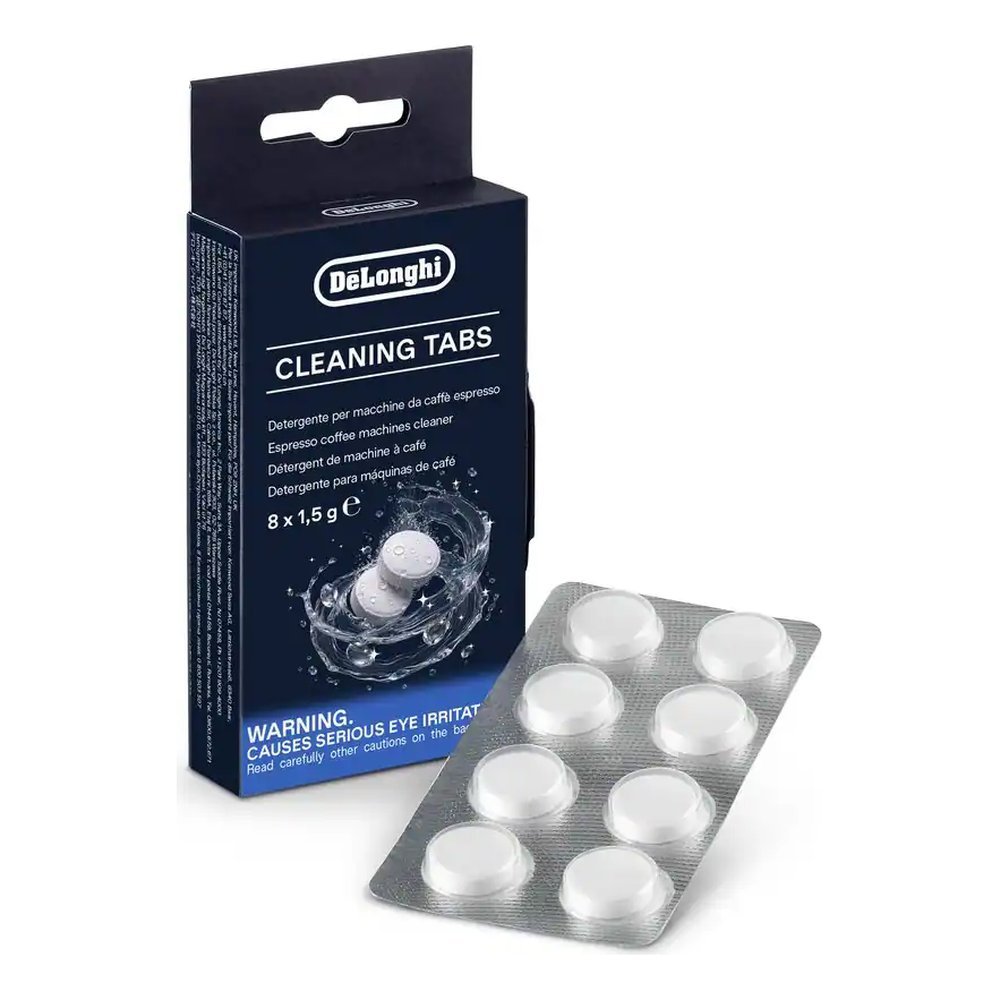
6. DeLonghi Cleaning Tabs DLSC552 – Best for DeLonghi Bean-to-Cup Machines
DeLonghi’s own compact tablets are sized specifically for the brew group of its bean-to-cup range, the Magnifica and Dinamica lines that make up a large share of DeLonghi’s actual Australian install base. Use is about as simple as this category gets: drop one tablet into the coffee grounds chute and run the machine’s rinse cycle, and DeLonghi’s own support documentation frames it as a non-corrosive, no-guesswork way to clear the oils and grounds that a plain water rinse cannot touch.
Compared to the Breville tablets above, this entry sits in a similar evidence position: strong, unambiguous Australian retail availability through DeLonghi’s own site, Bunnings and The Good Guys, but no deep well of dedicated owner reviews specifically praising or criticising this tablet on its own. Treat it the way you would treat any OEM maintenance part. The right, warranty-safe choice for the machine it is built for, rather than the product you would research from scratch for its own merits.
Pros
- Sized and formulated specifically for DeLonghi’s brew group, avoiding fit guesswork
- Simple one-tablet, one-cycle use through the machine’s own rinse function
- Broadly available across Australian mainstream and specialist retailers
Cons
- No significant independent review volume specific to this tablet, similar to the Breville entry above
- Only suits DeLonghi’s own brew-group cleaning cycle, not a cross-brand option
If you are chasing a full maintenance routine and not just the cleaning step, our guide to cleaning a DeLonghi coffee machine covers the daily wipe-down and weekly steps this tablet is meant to sit alongside, and descaling a DeLonghi coffee machine covers the separate mineral-scale side of the job.

7. Urnex Cleancaf – Best for Pod and Drip-Style Machines
Cleancaf comes from the same company behind Cafiza, but it is a different formula built for a different problem: machines without a group head to backflush at all. It is sold as safe across pod-style and drip-style machines and dissolves stale coffee oils through the tank or reservoir instead of a portafilter, which makes it the practical option for anyone whose “espresso machine” is actually a capsule machine or a filter brewer sitting on the same bench.
The distinctive feature here, and the reason it earns its own slot instead of just being “Cafiza for pod machines,” is a blue dye built into the formula specifically so you can see when you have rinsed thoroughly enough, instead of guessing after a couple of plain-water cycles and hoping for the best. It is a small design detail, but it directly solves the most common complaint about any through-the-tank cleaner: not knowing when the chemical taste is actually gone.
Pros
- Purpose-built for pod and drip machines that have no group head to backflush
- Blue-dye indicator removes the guesswork around whether a rinse cycle actually cleared the chemical
- Stocked in Australia through Amazon.com.au and specialist coffee retailers
Cons
- Not the product to reach for on a manual espresso machine with a proper group head; Cafiza or Puly Caff suit that job better
- Marketed broadly across many machine types instead of tuned to one brand’s specific quirks
For the day-to-day side of running a capsule machine, our guide to cleaning a pod coffee machine covers the water tank and capsule chamber habits worth building around a cleaner like this one, and if you specifically run a Nespresso, cleaning and descaling a Nespresso machine covers that model range in more detail.

8. Cafetto Daily Milk Frother Cleaner – Best Milk System and Steam Wand Cleaner
Every product above this one in the list is built for coffee residue. This one is built for milk, and it is a different kind of cleaning problem: dried milk protein and fat sitting in a steam wand or an automatic frother line is not just a taste issue, it is a hygiene one, and Cafetto’s Daily Milk Frother Cleaner is the clearest Australian-made answer to it. Independent laboratory testing cited by the manufacturer confirms it kills E. coli, Salmonella, Listeria and Enterococcus when used correctly, a specific, checkable claim instead of a vague “sanitising” label, though it is worth being upfront that this is manufacturer-commissioned testing, not a neutral third-party review.
Use is simple. A measured dose added to water, then run through the frother or steam wand several times, followed by a plain rinse, and Cafetto explicitly markets it for daily use instead of a monthly deep clean, which matches how often a household steaming milk every morning should actually be doing this. Puly Caff also sells a comparable Milk Plus frother cleaner in Australia if you would rather keep one brand across your whole cleaning kit, and the two are close enough in function that either is a reasonable pick.
Pros
- Australian-made, addressing a real daily hygiene need, not just an occasional deep clean
- Specific, named lab-tested pathogen claims instead of a vague sanitising label
- Widely stocked through Coffee Parts, Barista Warehouse and Alternative Brewing
Cons
- The pathogen-kill testing is manufacturer-commissioned, worth flagging honestly instead of treating as independent verification
- Solves a milk-specific problem only; it does nothing for group-head or brew-unit coffee residue
If your steamed milk still tastes off after a proper clean, the issue might be technique, not hygiene. Our guide to using a milk frother covers the basics worth double-checking first.

9. Urnex Full Circle Equipment Wash – Best Eco-Friendly Pick
Full Circle, now folded into Urnex’s Biocaf naming in some markets, is a phosphate-free, biodegradable backflush powder pitched squarely at buyers who want Cafiza-level cleaning without the same ingredient list. It is stocked in Australia through specialist retailers such as The Coffee Filter Shop, and one directly quoted review summed up the appeal plainly: no odour, biodegradable, and left the coffee tasting like the machine was new again.
Where this entry sits honestly on this list is as a values-driven alternative, not a proven step up in cleaning power over Cafiza or Puly Caff. Forum discussion of it exists but is thinner than the top two picks, and most of the praise we found centres on the eco credentials specifically instead of a documented performance edge. If phosphate-free and biodegradable actually matters to your household, this is the pick worth seeking out; if you just want the most-tested option on the shelf, Cafiza still leads for a reason.
Pros
- Phosphate-free and biodegradable formula for buyers who weigh that alongside cleaning power
- Directly quoted customer feedback describes a clean, odour-free result
- Stocked in Australia through specialist coffee equipment retailers
Cons
- Thinner forum discussion than Cafiza or Puly Caff, so this rests more on retailer availability and the eco angle than deep owner consensus
- No documented cleaning-power advantage over the category leaders, just a different ingredient profile
How to Choose a Coffee Machine Cleaner
Match the format to your machine type first. A backflush powder like Cafiza or Puly Caff only works if your machine actually has a group head and a blind filter to backflush through. Bean-to-cup and pod machines need a tablet or through-the-tank powder built for their own cleaning cycle instead, and using the wrong format is, at best, wasted product and, at worst, a machine part with nowhere for the powder to actually go.
Do not confuse a cleaner with a descaler. A cleaner strips coffee oils and protein residue; a descaler dissolves mineral scale from your tap water. Some tablets, like Jura’s 3-Phase, blend a bit of both, but most products on this list do one job specifically. If your machine is running slow or throwing error codes instead of just tasting stale, that is more likely a scale problem, and our guide to descaling an espresso machine is the one to read instead of buying another tub of cleaning powder.
Treat the milk system as its own job. Coffee-residue cleaning and milk-system cleaning are not interchangeable, and a machine that gets backflushed weekly but never has its steam wand or auto-frother properly cleaned is only half maintained. If you steam milk daily, a dedicated liquid like Cafetto’s Daily Milk Frother Cleaner or Puly Caff’s Milk Plus deserves its own spot in the cupboard.
Keep Your Machine Running
A cleaner only earns its keep as part of a proper routine. If you run a Breville, pair whichever backflush powder or tablet you picked from this list with our guides to cleaning a Breville coffee machine and descaling a Breville coffee machine, since the two jobs are genuinely separate and a lot of owners only ever do one of them.
DeLonghi owners should do the same with our guides to cleaning a DeLonghi coffee machine and descaling a DeLonghi coffee machine, and Smeg owners have both jobs covered in one place in our guide to descaling and cleaning a Smeg coffee machine.
If you are on a Nespresso or another capsule machine, our guide to cleaning and descaling a Nespresso machine covers both jobs specific to that range, and our more general guide to cleaning a pod coffee machine is worth a read regardless of brand. Grind consistency and coffee taste are also affected by a dirty grinder, not just a dirty machine, so if things still taste off after a proper clean, check our guide to cleaning a coffee grinder before assuming the cleaner did not work.
Frequently Asked Questions
What is the difference between a coffee machine cleaner and a descaler?
A cleaner removes coffee oils, grounds and protein residue left behind by brewing itself, usually through a backflush powder or a dedicated cleaning tablet. A descaler dissolves mineral scale built up from your tap water over time. They solve different problems and most machines need both, on different schedules, instead of one product doing the whole job.
How often should I clean my espresso machine’s group head?
CHOICE recommends backflushing or running a cleaning cycle roughly once for every 4kg of coffee that passes through the machine, which works out to somewhere between weekly and fortnightly for an average home user. Heavier daily use calls for more frequent cleaning, and a machine that smells or tastes stale is usually overdue regardless of the calendar.
Can I use the same cleaner for a bean-to-cup machine as an espresso machine?
No, not usually. Backflush powders like Cafiza and Puly Caff are built for machines with a group head and a blind filter. Bean-to-cup and pod machines need a tablet or through-the-tank powder designed for their own automatic cleaning cycle, such as the brand-specific Breville, Jura or DeLonghi tablets on this list.
Do I need a separate cleaner for my milk frother or steam wand?
Yes. Coffee-residue cleaners do not address dried milk protein and fat sitting in a steam wand or automatic frother line, which is a hygiene issue, not just a taste one. A dedicated milk system liquid, used daily if you steam milk every morning, is worth treating as a separate step in your routine.
Is it safe to use a universal cleaning tablet in a brand-specific machine?
Many universal tablets are formulated to work safely across several brands, but using your machine manufacturer’s own tablet removes any doubt about fit, dose and cleaning-cycle compatibility, and some brands tie warranty claims to using approved parts and consumables. If in doubt, check your machine’s manual before switching to a universal product.
Verdict
Cafiza and Puly Caff lead for espresso machines; match tablets and milk cleaners to your specific machine
For anyone with a manual or semi-automatic espresso machine, Urnex Cafiza is the safest first buy, backed by the strongest forum consensus on this list and a rinse that does not leave anything behind. Puly Caff Plus is an equally credible NSF-certified alternative if that is what your local supplier stocks instead. Bean-to-cup and pod owners are better served by their machine’s own brand-specific tablet, Jura, DeLonghi or Breville, since fit and warranty compatibility matter more than raw cleaning power in that category, and anyone steaming milk daily should treat a dedicated liquid like Cafetto’s Daily Milk Frother Cleaner as a separate, non-optional step rather than an afterthought.
